
Arrest Warrants in Uvalde County
An arrest warrant is a written command from a magistrate telling a peace officer to bring a named person into custody. Texas demands a sworn basis before one issues. The order itself must name the accused or give a workable description, state the offense, and direct that the person go before the issuing authority. None of that tells you which Uvalde County court signed it. A felony case may run through the 38th Judicial District Court, while a justice-of-the-peace or municipal case goes to a lower-court judge sitting as magistrate. The clerk named on the case file can confirm the exact court for any Uvalde County warrant question, so ask there first.
From Complaint to Uvalde County Arrest Warrant
How does a complaint become a warrant in Uvalde County? Texas lets a magistrate issue one after a proper request, or after someone swears under oath that an offense happened. In justice and municipal cases, Chapter 45A spells out the sworn complaint or probable-cause affidavit and the parts the warrant must carry. A summons is sometimes allowed instead. Ignore it, though, and failure to appear can trigger a warrant just the same. One caution: the rule sets the legal path, not a public index. It will not tell you which Uvalde County officer received a particular order. That detail comes from the court, so ask about the signed warrant and the agency directed to serve it. Texas Code of Criminal Procedure Chapter 15 governs how arrest warrants are issued and executed.
What a Uvalde County Arrest Warrant Contains
Uvalde County publishes no sample warrant or local number format to compare against. The Texas statutory requisites make a useful field guide, nothing more. The real form, plus any bond notation, comes from the issuing clerk.
| Warrant reference | Use the number shown by the issuing clerk; no public sample format was verified. |
|---|---|
| Named person | The warrant names or describes the person to be taken into custody. |
| Charge or offense | The order identifies the offense connected to the case. |
| Issuing authority | It identifies the magistrate and court or authority before whom the person must be brought. |
| Bond or bail | Ask the court or magistrate for the current amount and conditions; no countywide schedule was found. |
| Officer direction | The order directs a peace officer or specially named person to execute it. |
Uvalde County Warrant Papers May Be Sealed
Not every paper behind a warrant is public on demand. A blank result does not mean the court holds no file. Texas search-warrant affidavits generally open up after execution, still subject to statutory limits, and a judge may seal other process or hold it back during an active investigation. In Uvalde County juvenile matters, a child arrest warrant and its supporting complaint stay confidential under the Family Code. When a Uvalde County record seems missing, ask the clerk what can be released and whether a written request should go to the court, the sheriff, or a city agency. Texas Code of Criminal Procedure Chapter 18 sets out the rules for search-warrant affidavits; it is not an arrest-warrant roster.
How Uvalde County Arrest Warrants Are Served
Execution falls to the peace officer named in the warrant or otherwise authorized to serve it. Uvalde County lists sheriff and constable offices for that work, municipal police handle city matters, and Sabinal's ordinance assigns its police chief to execute court writs and process. A court can also direct a different local agency to serve papers, so confirm the actual assignment or return. After an arrest, the person goes before a magistrate, and the court takes up bond and the next setting. The Uvalde County sources publish no separate warrant-window entrance, booking schedule, after-hours surrender rule, or required document list. Call the sheriff or the issuing court before you travel.
Uvalde County Arrest Warrant Service Roles
Sheriff, constables, and city police serve papers; they are not interchangeable record desks. The issuing court controls the warrant and its status, while the officer handles execution. Uvalde County's constable directory lists precinct contacts, and the sheriff page covers the county service route. A city arrest question goes to that city's own law-enforcement contact. For a felony, start with the 38th District Clerk and ask which agency holds the warrant. A direct answer from the office beats guessing from a countywide label.
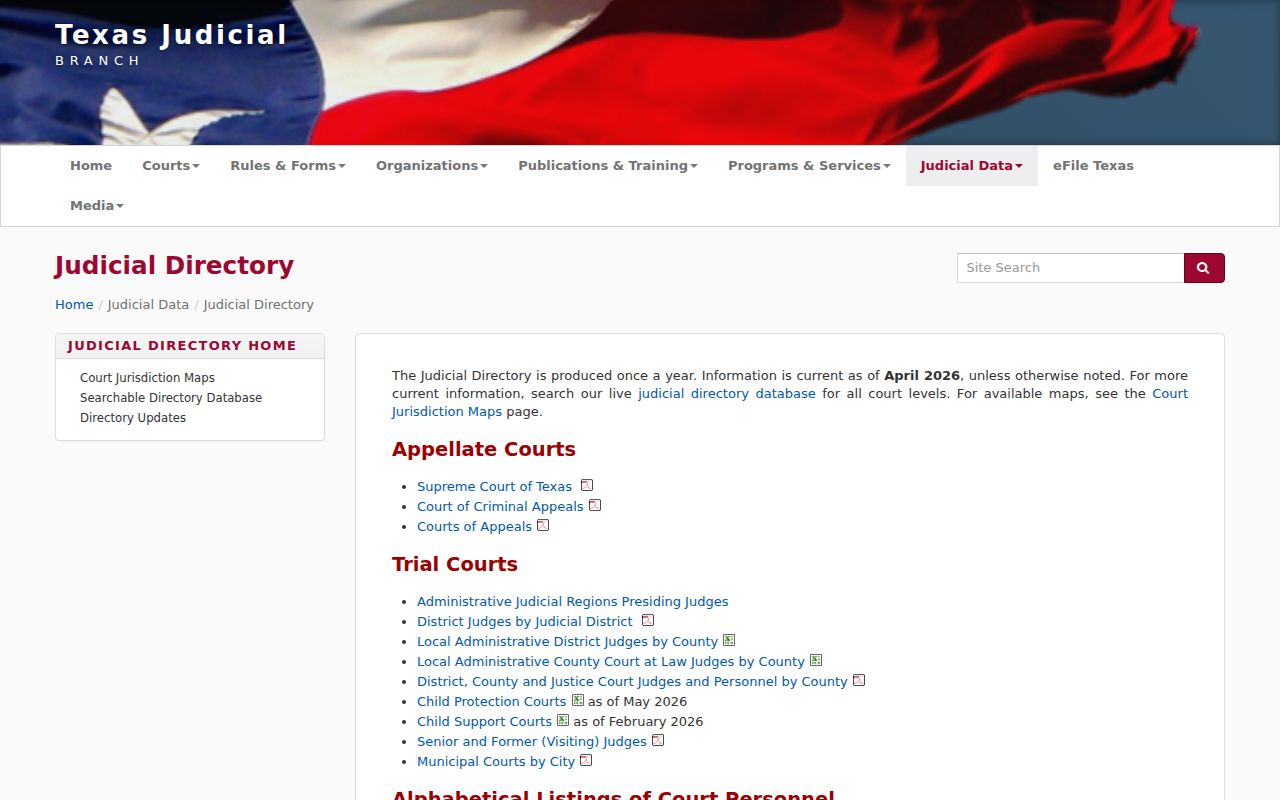
The state judicial directory can help you find the Uvalde County court contact; it is not a case-status search.
Uvalde County Arrest Warrant Summons Bench Warrant
An arrest warrant orders custody on a probable-cause basis. A summons just tells a person to appear. A bench warrant follows a missed obligation in an open case, and the Uvalde County bench-warrant process turns on that different court trigger.
| Feature | Arrest Warrant | Summons | Bench Warrant |
|---|---|---|---|
| What it orders | Officer takes the named person into custody | Person appears as directed | Arrest tied to a missed duty |
| Basis | Probable cause or another law-authorized ground | Law permits a notice to appear | Failure to appear or comply |
| Who issues | Authorized magistrate | Court or authority allowed by law | Judge handling the existing case |
| Next step | Ask counsel and court about surrender or bond | Appear by the stated date | Ask the issuing court about reset or recall |
Uvalde County Federal Warrants Follow Del Rio
Federal cases run through a separate court system. Uvalde County sits in the Del Rio Division of the Western District of Texas. Federal criminal case records are searchable through PACER, and the U.S. Marshals Service describes a Lone Star Fugitive Task Force footprint that lists the Uvalde Police Department among its Del Rio partners. That task force is an enforcement program, not a public warrant lookup. A federal warrant question belongs with the issuing federal court, the arresting agency, or an attorney. Don't lean on a county court portal for a federal case search. The Western District jurisdiction page maps the Del Rio Division.
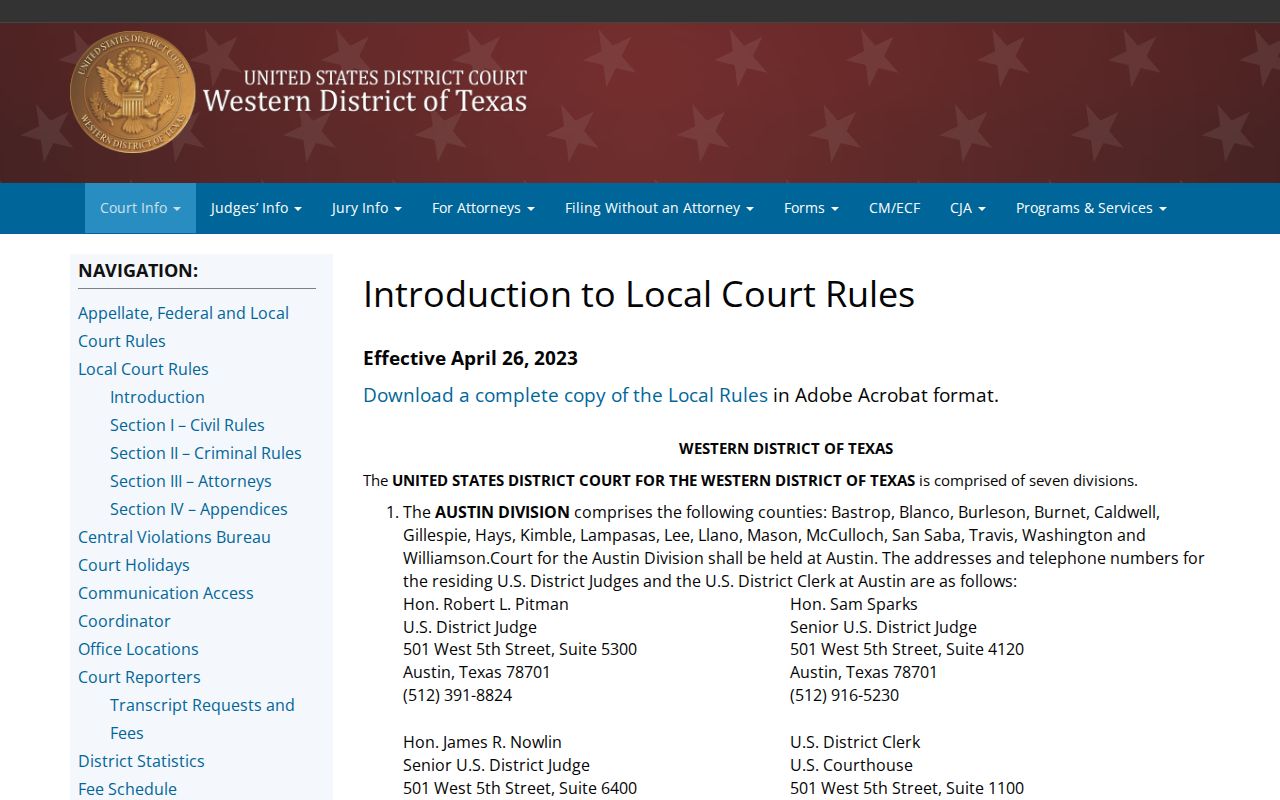
For Uvalde County residents, federal warrant matters run through the Del Rio court, apart from local JP and municipal cases.
Uvalde County Arrest Warrant Next Steps
Start with the issuing court in Uvalde County and confirm the warrant is still active. Ask about the bond. Get the surrender location and next court date too. It also helps to ask whether a motion to recall or quash the warrant is on the table. A Texas attorney can review the case and set up a voluntary appearance or a bond plan, and posting bond only covers release conditions; the criminal case itself continues.
Important: If you believe an arrest warrant may be active, speak with an attorney and the issuing court before deciding when and how to appear.
Uvalde County Arrest Warrant Bond Questions
Uvalde County's budget carries separate accounting lines for taking a bond and for approving one, but neither entry tells you an individual's bond amount. No countywide bond schedule exists, and no warrant-specific posting window is published. The magistrate or the issuing clerk holds the real answers: the amount, the conditions, the payment methods the court accepts, and where to post. The Uvalde County Sheriff's Department sits at the jail complex on King Fisher Lane, apart from the courthouse counters. Its published page gives no surrender hours or booking steps. Call the sheriff and the court before you drive over. Keep every bond receipt. Keep the court order as well.